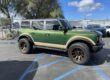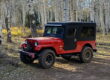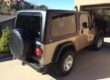


Walk into our shop in Gardena around seven in the morning and the first thing that hits you is the smell. Polyester resin, fresh paint, a little sawdust from the crating bench in back. The second thing you notice is the molds. Big, glossy, vehicle-shaped tools lined up like boats in dry dock, some of them older than the people working around them.
This is where American made hardtops come from. Not a port. Not a warehouse full of boxes with someone else’s factory sticker peeled off. A working shop in Los Angeles, California, where a small crew lays fiberglass by hand the same way we did decades ago, because nobody has shown us a faster method that holds up.
I get asked about this constantly. Folks call about a top for a Jeep TJ or an old Geo Tracker, and somewhere in the conversation they pause and ask, “Wait, you actually make these? In the States?” Yes. Every single one. And since people seem genuinely surprised by that, I figured it was time to write the whole thing down.
So here it is. The full story of how a Rally Tops hardtop gets built, from an empty mold to a wood crate on a freight truck. The materials, the 14 steps, the test fit, the stuff we refuse to cheap out on. Grab a coffee. I’ll show you around.
“Made in the USA” Is Easy to Say. Here’s What It Means in Our Shop.
Plenty of companies stamp a flag on the box. Fewer can tell you the name of the person who laid the fiberglass in your roof. We can, because he’s probably standing twenty feet from my desk right now.
When we say these are American made hardtops in the fullest sense, we mean the whole job happens under one roof. The molding. The lamination. The paint booth. The glass bench. The carpet table. Even the wood crates get built here. There’s no overseas supplier we’re waiting on and no container ship we’re tracking.
Why That Should Matter to You
Three reasons you get more from American made hardtops, and none of them are patriotic fluff.
First, control. Every layer of every top gets inspected by the person who laid it, then again by the person at the next station. Defects don’t travel far in a small shop. Somebody catches them, usually loudly.
Second, parts. A hardtop should outlive your truck, but seals wear and glass breaks. Because we manufacture here, replacement parts are a phone call away, even years down the road. Ask anyone who bought an imported top in 2015 how that search is going.
Third, accountability. Call (800) 664-8677 between 8 a.m. and 8 p.m. Pacific, Monday through Saturday, and you’ll reach someone who can walk to the shop floor and look at your actual top. Try getting that from a drop-shipper.
The Problem With the Cheap Stuff
I’ve inspected a lot of bargain tops over the years. Customers bring them in, usually embarrassed, usually leaking. The pattern never changes: thin chopper-gun fiberglass that flexes like a drum skin, paint that chalks after two summers, plastic windows gone cloudy and yellow. The math on a “deal” like that stops working the first time you hit a rainstorm on the interstate. And the gap between bargain imports and American made hardtops only widens with every season.
A Veteran-Owned Shop Built by Truck People
Rally Tops didn’t start with a business plan. It started with sport trucks we actually drove. Jeeps, Samurais, Trackers, the little 4x4s everyone loved and the big manufacturers eventually abandoned.
The frustration that launched this company is one you might recognize. Your soft top wears out, you go looking for a real roof, and you discover nobody makes one anymore. We heard that complaint so many times that we started building master molds for orphaned vehicles ourselves. Today we’re the only U.S. manufacturer making a hardtop for the Kia Sportage, and one of the very few still serving the Suzuki and Isuzu crowd. Building American made hardtops for orphaned rigs turned into our calling card.
We’re a veteran-owned business and a member of SEMA, the Specialty Equipment Market Association. Both of those facts shape how the shop runs. Disciplined process. No shortcuts. And a genuine soft spot for the customer calling about a 1978 CJ7 that belonged to his dad.
How We Build American Made Hardtops: The Proven 14-Step Process
People assume fiberglass work is some mysterious art. Honestly, it’s closer to baking. Good ingredients, correct order, no rushing the oven. Here’s our recipe, photographed straight off our shop floor.
Stage One: Where the Strength Comes From (Steps 1–5)
Step 1: A Clean, Waxed Master Mold

Everything begins with the mold, a giant negative of the finished top that we built off the actual vehicle. Before each use it gets cleaned, inspected for dings, and waxed until it shines. Skip the wax and you’ll regret it twice: once when the surface comes out wavy, and again when the cured part refuses to let go.
Step 2: Spraying the Gelcoat

Next comes gelcoat, sprayed evenly across the whole mold surface. This becomes the hard outer skin of your top, the armor layer that faces sun, rain, and the occasional low-hanging branch. It also helps the finished part release cleanly when curing is done.
Step 3: Laying the Fiberglass by Hand

Here’s the part I’d show you first on a shop tour. Our guys lay multiple layers of woven fiberglass cloth into the mold entirely by hand, working the resin through each layer, chasing out air bubbles, adding extra material around door openings and corners where stress concentrates. Hand layup is slow. It’s also the single biggest reason American made hardtops from this shop shrug off decades of trail flex without cracking.
Step 4: Foam and Mat Reinforcements

Strength alone isn’t enough; a big flat panel needs stiffness too. So we bond foam cores and fiberglass mat into the structural zones, the way a boat hull gets ribs. This is why customers keep telling us their truck got quieter overnight. Stiff panels don’t drum.
Step 5: A Full 24 Hours in the Mold

Then we do the hardest thing in manufacturing. Nothing. The shell sits in its mold for a full day while the resin cures completely. Factories that pull parts early lock stress into the laminate, and stressed fiberglass always finds a way to crack later. Usually on your watch, not theirs.
Stage Two: From Raw Shell to Real Hardtop (Steps 6–9)
Step 6: Out of the Mold

Demolding day is our first big inspection. The shell comes out wearing the mold’s exact shape and finish, and we go over it for voids, thin spots, anything off. A part that doesn’t pass doesn’t move forward. Simple as that.
Step 7: Grinding the Edges True

Fresh fiberglass has ragged, sharp flash along every trimmed edge. Each opening gets ground smooth and straight, doors, windows, rear hatch, all of it. Clean edges are what let seals sit flush. Flush seals are what keep your gear dry in a downpour.
Step 8: Carpeting the Interior by Hand
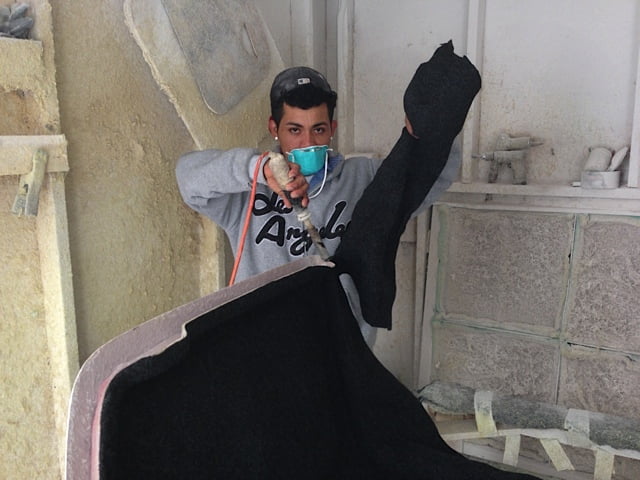
Bare fiberglass overhead looks unfinished and echoes like a gymnasium. So every top gets a mildew-resistant, medium-gray automotive carpet liner, cut and fitted by hand. It insulates against heat, swallows road noise, and makes the cabin feel factory-built. Plenty of competitors skip this step. You’d notice within a mile.
Step 9: Sanding for Paint

Ask any painter: the spray gun is the easy part. Before color goes on, the entire exterior gets sanded to give the paint something to bite into. Rushed prep is exactly why cheap tops peel and orange-peel. Ours don’t, because this station takes as long as it takes.
Stage Three: Color, Glass, and the Moment of Truth (Steps 10–12)
Step 10: UV-Resistant Paint

Each top gets sprayed in single-stage, UV-resistant automotive paint. White, black, or tan, your call. Remember, no panel on your vehicle takes more direct sunlight than the roof, so UV resistance isn’t a nice-to-have. And if you ever want a custom color, any body shop can match over our standard finishes.
Step 11: Tinted Safety Glass Goes In

Real glass. That deserves its own sentence, because so many tops ship with plastic windows that scratch and fog within a couple of seasons. We install tinted automotive safety glass in every side and rear opening, plus the back door hardware. Want sliding side windows for the dog? That happens at this bench too.
Step 12: The Test Fit

Before anything ships, the finished top goes onto an actual vehicle, and every latch, fitting, and seal gets installed and checked. If something doesn’t line up, it gets fixed here, by us, today. Not in your driveway next Saturday with you holding a wrench and a grudge. I consider this step the difference between a manufacturer and a parts factory.
Stage Four: Getting It to You in One Piece (Steps 13–14)
Step 13: Wrapped Like It Matters
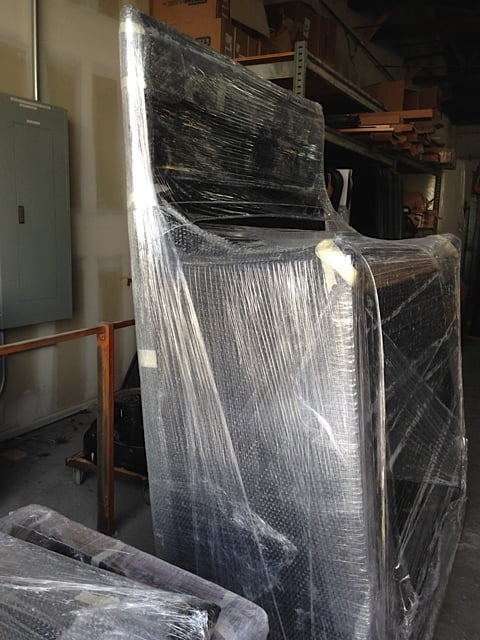
The same crew that built your top wraps it, padding every contact point. Freight terminals are rough places. We pack accordingly.
Step 14: Crated in Wood, Shipped Nationwide

Finally the finished American made hardtop gets secured inside a custom wood crate, not cardboard, and handed to a national freight carrier. The phrase we hear most often after delivery is some version of “not a single scratch.” That’s the crate doing its job, all the way from our floor in Los Angeles to your driveway, anywhere in the country.
The Materials We Refuse to Cheap Out On
A process is only as honest as its ingredients. Three things in particular separate American made hardtops like ours from the bargain bin.
Woven Cloth, Not Chopper-Gun Spray
Budget factories love the chopper gun. It sprays short random fiberglass strands mixed with resin, fast and cheap, and it produces a brittle, resin-heavy panel with strength you can’t predict. Woven cloth laid in deliberate layers behaves completely differently. The fibers interlock into a continuous structure that flexes, recovers, and refuses to crack on washboard roads. Stronger than your original factory top, in fact. We’ve measured.
Gelcoat Plus Real Automotive Paint
The gelcoat seals the laminate against moisture creeping in. The single-stage UV-resistant paint takes the daily beating from sun and car washes. Together they’re why a ten-year-old Rally Top still looks presentable while bargain tops from the same era have gone chalky and gray.
Safety Glass and a Finished Interior
Tinted safety glass stays clear for the life of the top, cuts cabin heat, and adds genuine security for whatever’s behind the seats. Add the hand-fitted carpet headliner and the inside feels like it rolled out of an OEM plant. These two details cost us real money on every unit. Customers mention them in reviews more than anything else, so apparently it’s money well spent.
Searching “Hardtops Near Me”? Read This First.
Here’s a conversation I have weekly. Someone types “Jeep hardtops near me” or “hardtop shop near me” into Google, spends a weekend driving to salvage yards, and ends up on the phone with us anyway, tired and empty-handed.
The hard truth: for most sport trucks, there is no local option anymore. Factory tops for a Samurai, an Amigo, a Tracker, or an older CJ dried up years ago. What’s left nearby is usually a sun-baked used top with hidden cracks and missing hardware, priced like a collector’s item. We wrote a whole post about that gamble.
Buying factory-direct flips the equation. Your top is built to order in our Los Angeles shop, crated in wood, and delivered by freight to your door in any state. Installation is genuinely a driveway job: every order includes instructions and all the hardware, and most owners handle it in an afternoon with one helper and a couple of cold drinks. So if you’ve been searching for fiberglass hardtops near me with nothing to show for it, the nearest source of true American made hardtops is probably our shop floor, no matter where you live.
Why Owners Trade Soft Tops for American Made Hardtops
Almost every customer arrives at our door the same way: fed up. The zippers quit working, the vinyl windows turned to frosted glass, and conversations above 55 mph became shouting matches. Sound familiar? Then the next two minutes will too.
The Quiet Hits You First
A rigid fiberglass shell with carpet overhead changes the entire character of a truck. The drumming stops. The flapping stops. One customer told me his wife actually fell asleep on a highway trip for the first time in eleven years of Jeep ownership, and he wasn’t sure whether to thank us or bill us. Heat stays in during the winter, too, which quietly turns a three-season toy into a daily driver. More than a few owners have confessed they now look forward to the cold months.
Then the Security. Then the Savings.
A soft top is a pocketknife away from being an open vehicle. Locked doors mean nothing when the roof unzips. Swap in tinted safety glass and a solid shell, and suddenly your tools, your camera bag, and your dog’s dignity are all protected. Rain stops being an event as well. We’ve had customers pressure-wash their rigs straight over the roof seams just to prove a point. Zero leaks.
The money side is the part people underestimate. Soft tops are consumables. You’ll buy another one, then another, every handful of years. A properly built fiberglass top usually outlasts the vehicle itself and lifts resale value at trade-in time, because the next buyer sees a finished truck instead of a project. Spend once, complain never.
Every Vehicle We Build For

Because we own our master molds outright, we keep building American made hardtops for rigs the rest of the industry forgot. The current lineup:
- Jeep: Wrangler JL, JK, TJ, YJ, and Unlimited LJ, plus CJ5, CJ6, CJ7, CJ8 Scrambler, and Jeep half-doors
- Ford: Bronco, including the slant top
- Suzuki: Samurai, Sidekick, Vitara
- Chevy/Geo: Tracker (1989–2004) and the Asuna/Pontiac Sunrunner
- Isuzu: Amigo and Rodeo Sport
- Kia: Sportage, and we’re the only U.S. maker building it
- Toyota: RAV4 one-piece
- Mahindra: Roxor
We also build truck lids for most major pickup brands and stock replacement parts for Jeep Wrangler and Suzuki Samurai tops. If it ever wore a soft top, odds are good we can put a real roof on it.
What You’re Actually Buying
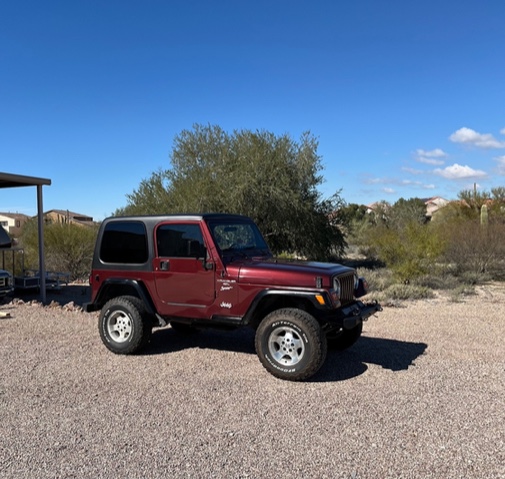
Let’s talk plainly about money, because a custom hardtop is not an impulse purchase. Depending on the vehicle and options, you’re investing in the low thousands. I won’t pretend otherwise.
Here’s what that buys. A made-to-order, American made hardtop, hand-laid for your exact model. A quieter cab, a warmer winter, a dry interior, and gear that stays put behind locked glass. A roof that typically outlasts the vehicle and lifts its resale value, while a soft top is a consumable you’ll replace again and again. And behind all of it, a satisfaction guarantee with a full refund of the purchase price if you’re not happy, backed by people you can actually reach on the phone.
One of my favorite calls last year came from a gentleman who put one of our tops on a CJ8 ages ago. He’d just bought a Wrangler. Didn’t ask for a quote, didn’t shop around. Just said, “Build me another one.” That, right there, is the whole business model.
Frequently Asked Questions
Every one of our American made hardtops is built start-to-finish in our own shop in the Los Angeles area (Gardena, California). Molding, fiberglass layup, paint, glass, carpet, test fitting, and crating all happen under one roof. We’re a veteran-owned business and a SEMA member.
Multiple layers of woven fiberglass, hand-laid over a sprayed gelcoat skin and reinforced with foam and fiberglass mat. The shell then cures in the mold for a full 24 hours before finishing begins.
White, black, or tan, all in single-stage UV-resistant automotive paint. Many owners later have a body shop color-match the top to their vehicle, which works beautifully over our standard finishes.
Yes, and most customers do. Every order ships with clear instructions and all required hardware. Plan on an afternoon with one helper. No special tools, no body shop bill.
Your top is wrapped, secured in a custom wood crate, and delivered by a national freight carrier anywhere in the country. Carriers typically schedule a delivery window with you, and tops routinely arrive without a scratch.
Finished, not bare. We hand-fit a mildew-resistant, medium-gray automotive carpet liner into every top. It insulates, cuts road noise dramatically compared with a soft top, and looks factory-made.
Jeep Wrangler JL through YJ plus the CJ line, Ford Bronco, Suzuki Samurai, Sidekick and Vitara, Geo and Chevy Tracker, Sunrunner, Isuzu Amigo and Rodeo Sport, Kia Sportage, Toyota RAV4, and the Mahindra Roxor, along with truck lids and replacement parts.
We offer a satisfaction guarantee with a full refund of the purchase price (shipping costs excluded). Reach us at (800) 664-8677, 8 a.m. to 8 p.m. Pacific, Monday through Saturday, and you’ll talk to the people who built your top.
Come See Where Your Roof Comes From
Most companies hide their factory. We photograph ours and put it on the internet, because the shop floor is the best sales pitch we have. Fourteen steps, honest materials, a test fit on a real vehicle, and a wood crate with your name on it. American made hardtops are the only kind we’ve ever built, and the only kind we ever will.
If your soft top is on its last zipper, browse our hardtop lineup or call (800) 664-8677 and tell us what you drive. We’re truck people. We’ll talk your ear off either way.