

Here’s a claim that gets people’s attention, so let me say it plainly and then spend the next few thousand words backing it up: the hardtop we’ll build for your rig is tougher and better-finished than the one that rolled off the original assembly line.
That sounds like bragging. It isn’t. It’s just what happens when you hand-build something one at a time instead of stamping out thousands on a deadline. Factory tops were built to a budget and a clock. Ours are built to last longer than the truck under them, and plenty of our customers will tell you theirs already has.
I’ve had owners call after many years with the same top still sealed tight and quiet. No cracks, no leaks, just a little faded paint they buffed back to life in an afternoon. You don’t get that kind of life out of a corner-cut top, and you sure don’t get it by accident. That’s the reason a lot of our business comes from word of mouth. People who’ve lived with one of our tops tend to send us their friends.
So let’s open the hood on durability: what actually makes a high-quality fiberglass hardtop last, the materials we use and why, and the honest reasons our finish beats the original. No fluff. Just what we’d tell you over the phone if you asked, “Is this thing really going to hold up?”
What “Higher Quality Than Your Original Top” Actually Means
We say it right on our site: our process produces hardtops that are stronger and higher-quality than your original top. That’s a big statement, so it’s fair to ask how a small shop in Los Angeles outbuilds a major automaker.
The answer is boring, and that’s the point. We’re not chasing a quarterly production number. Nobody on our floor is told to pull a part early to hit a quota. Every top gets the same slow, deliberate build, and slow is exactly what durability requires. A factory measures success in units per hour. We measure it in how few warranty calls we get and how many customers come back for a second top. Different goals, very different roofs.
Built One at a Time, Not by the Thousand
A factory line optimizes for speed and cost per unit. That’s their job. But it means thin laminates, fast cures, and finishes that are “good enough” to leave the lot. We optimize for one thing: a top that’s still on your truck in twenty years. When you build made-to-order, you can afford to do it right, because you’re building one top for one owner, not ten thousand for a spreadsheet.
Tested Before It Ever Ships
Every top we make is tested and test-fitted on an actual vehicle before it leaves the building. All our woven fiberglass hardtops are custom made to aftermarket standards and checked before shipment. A factory can’t fit-check every single roof it produces. We can, and we do. A top that fits tight is one that seals, and sealing is what makes it last.
The Materials Inside a High-Quality Fiberglass Hardtop
Durability in a high-quality fiberglass hardtop isn’t magic. It’s material choices, made honestly, layer by layer. Here’s exactly what goes into one of our tops and why each choice matters years down the road.
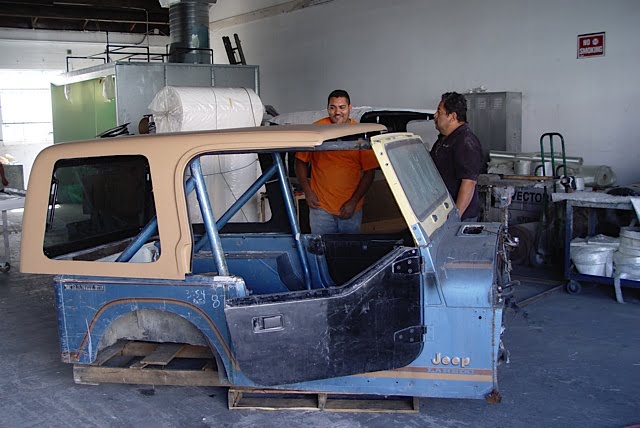
Multiple Hand-Laid Layers of Woven Fiberglass
This is the foundation of the whole thing. Our tops are constructed from multiple layers of woven fiberglass, hand-laid into the master mold. Woven cloth matters. Cheaper shops spray chopped strands from a gun, which is fast but brittle and unpredictable, because the fibers land in random short pieces with no continuous grain. Woven layers interlock into one continuous structure that flexes with the road and springs back instead of cracking. Think of the difference between a pile of loose toothpicks and a woven basket: one snaps the moment you stress it, the other bends and holds. That’s the biggest reason a high-quality fiberglass hardtop shrugs off decades of washboard trails and speed bumps.
Foam and Mat Reinforcement Where It Counts
Strength without stiffness lets a big panel drum and flex until it fatigues. So we bond foam cores and fiberglass mat into the structural zones, like ribs in a boat hull. This reinforcement is why our tops stay rigid and quiet for the long haul instead of rattling loose after a few winters. A stiff panel also fatigues far slower, because it isn’t constantly flexing at the same weak points. Stiffness and durability are two sides of the same coin.
Gelcoat Skin That Seals Out Moisture
Before any fiberglass goes in, we spray a gelcoat layer that becomes the hard outer skin. Beyond giving the top its base color, gelcoat seals the laminate against moisture creeping in. Water intrusion is what quietly kills a cheap top from the inside, rotting reinforcements and delaminating layers long before you’d ever notice from the outside. Our gelcoat armor is the first line of defense against it, and because we spray it evenly across the entire mold surface, there are no weak spots for moisture to sneak through.
Single-Stage UV-Resistant Paint
Every top is finished with a single-stage, UV-resistant automotive paint. Black is the standard color, with white and tan available as options. No panel on your vehicle takes more direct sun than the roof, so UV resistance isn’t optional if you want the finish to survive. Cheap tops use a base pigment that isn’t built to fight the sun, which is why they go chalky so fast. Ours is chosen for the fight. That’s a big part of why our finish outlasts a factory top’s, and if you ever want a custom color, any body shop can match right over ours.
The 24-Hour Cure: The Step That Makes a Top Last
If I had to point to one step that separates a high-quality fiberglass hardtop from a disposable one, it wouldn’t be a fancy material. It would be patience.
Why We Never Rush the Cure
After the fiberglass is laid, every shell sits in its mold for a full 24 hours while the resin cures and hardens completely. A production line can’t afford that kind of time, so it pulls parts early to keep the numbers up. The problem is that pulling a part before it’s fully cured locks stress right into the laminate, and stressed fiberglass always finds a way to crack later, usually years down the road, usually on the customer. We’d rather build fewer tops correctly than more tops quickly.
Curing Is What You Feel Years Later
You can’t see a proper cure, but you feel its absence. It shows up as a crack around a corner, a soft spot, a roof that never quite fit right. A fully cured shell stays dimensionally stable, holds its shape against heat and cold, and keeps sealing tight decade after decade. This one quiet, unglamorous step is a huge part of why our tops earn the “outlast the vehicle” reputation our customers keep repeating.
The Hardware and Glass That Make It Last
A durable shell is only half of what makes a high-quality fiberglass hardtop. The parts you touch every day, the glass, the latches, the struts, are where a lot of tops quietly fall apart. Not ours.

DOT-Approved Tempered Safety Glass
The side windows and rear hatch are real DOT-approved tempered safety glass, not plastic. Plastic windows scratch, cloud, and yellow within a couple of seasons. Real safety glass stays clear for the life of the top and adds genuine security for whatever’s behind your seats. It also handles temperature swings, rock chips, and years of wiper use in a way plastic simply can’t. When you’re relying on a window for a decade or more, the material it’s made of stops being a small detail.
31% Tint for Comfort and Protection
Our windows and rear hatch come tinted to 31%, the maximum allowed by law. That cuts cabin heat, reduces glare, protects your interior from sun fade, and keeps prying eyes off your gear. It’s a durability feature as much as a comfort one, because less heat soak means less stress on your whole interior over the years.
Dual Gas Struts and Two Locks
The rear hatch lifts on dual gas struts strong enough to hold it up even during off-roading. It comes up with a flick of the wrist and stays there. Two locks give you real security. These are the small parts that separate a roof still working perfectly at year fifteen from one sagging and sticking at year three. Hardware is usually where corners get cut on a budget top, because buyers don’t think to ask about struts and latches. We build them to the same standard as the shell, because a roof you can’t open easily or lock securely isn’t really finished.
“Weather Guard” Insulation and a Carpeted Interior
Inside, every top is finished with a mildew-resistant gray carpet, backed by what we call our “Weather Guard” treatment. Together they cut road and wind noise dramatically and insulate the cabin, so your AC and heater work more efficiently. And because the carpet resists mildew, it holds up to years of real weather without turning musty. A finished, insulated interior isn’t just nicer. It protects the top and everything under it.
High-Quality Fiberglass Hardtop vs. the Cheap Alternatives
Not all hardtops are built the same, and the differences don’t always show up on day one. They show up on year five, in a rainstorm, on a rough road. Here’s a straight look at how a high-quality fiberglass hardtop stacks up against the two things people compare it to: a bargain import and a worn-out used top.
Versus a Bargain Import
Imported tops are built to hit a price, and it shows in the places you can’t see. Thin, sprayed laminates flex until they crack. Pigments chalk out after a couple of summers. Plastic windows fog. Worst of all, when a seal fails or a strut gives out three years later, the seller has often vanished and the parts vanish with them. A high-quality fiberglass hardtop costs more up front, but it’s the last top you’ll buy, not the first of several.
Versus a Used Top
A used top can look like a steal until you get it home. Sun-baked fiberglass hides hairline cracks, old seals leak, and mounting hardware goes missing. If you’ve been searching “used hardtop near me” hoping to save a few dollars, this is the part nobody warns you about: you inherit somebody else’s wear with no warranty and no support. A new, made-to-order top arrives fitted, sealed, and complete, with parts backup for decades. Once you add up the repairs a used top usually needs, the “deal” rarely stays a deal.
Versus a Soft Top
There’s really no contest here on durability. A soft top is a consumable. Zippers fail, vinyl windows cloud and crack, and the whole thing needs replacing every handful of years. A high-quality fiberglass hardtop is a one-time investment that typically outlives the vehicle, adds security, and lifts resale value. Owners who make the switch almost never look back, and they tell us so constantly.
Durability You Can Hear: What Owners Say After Years of Use
You don’t have to take my word for any of this. Our customers have been living with these tops for decades, and they’re not shy about it.

One Samurai owner put it better than our marketing ever could. He compared his Rally Top directly against his son’s factory hardtop Samurai and told us his Rally Top was quieter, absorbed more road and wind noise, and fit much tighter than other aftermarket tops he’d owned. That’s the whole thesis of this post in one honest review: tighter fit, quieter ride, better build.
Another owner called it a quality product that’s virtually maintenance-free and will outlast the vehicle, adding that he’ll never go back to a cloth top again. We hear “outlast the vehicle” a lot, and it never gets old. An Amigo owner told us his ’93 gets double-takes from passing cars. A Tracker owner said three coworkers asked about his “new” vehicle within two weeks of the install. That’s durability and finish doing their job together: a top that looks new and stays that way.
Then there are the storm tests we never asked for. Owners across the country tell us the same thing after heavy rain: no leaks, everything bone dry, even when the old rag top used to soak everything. One customer summed it up simply after a rough storm: no leak, everything in top shape.
How a High-Quality Fiberglass Hardtop Handles Real-World Punishment
A top doesn’t live in a showroom. It lives outside, year-round, taking everything the road and the sky throw at it. So let’s talk about what actually happens to a high-quality fiberglass hardtop out in the real world, and why ours keeps going where cheaper tops give up.
Sun and Heat
Direct sunlight is brutal on a roof. UV rays break down cheap pigments and soften weak laminates until they warp. Our gelcoat skin and single-stage UV-resistant paint are chosen specifically for this fight, and the 31% tinted glass keeps heat from cooking the interior. Years of full sun that would leave a bargain top chalky and faded barely register on a Rally Top with basic care.
Rain, Snow, and Freeze-Thaw
Water is the quiet killer of hardtops. It seeps into unsealed laminates, freezes, expands, and cracks them apart over a few winters. Our sealed gelcoat construction, ground-true edges, and tight test-fit keep water out in the first place, which is why owners report zero leaks through heavy storms and hard winters. Keep the water out from day one and it never gets the chance to do its damage.
Trail Flex and Vibration
Off-road, your whole vehicle twists and flexes, and a rigid roof has to move with it without cracking. This is exactly where hand-laid woven fiberglass earns its keep. The interlocked layers flex and recover, and the foam-and-mat reinforcement keeps large panels from fatiguing. It’s the difference between a top that rattles loose after a season of trails and one that’s still tight after a decade of them.
Everyday Wear
Then there’s just life: car washes, parking-lot dings, loading and unloading, the rear hatch opening thousands of times. The dual gas struts are built to hold up to it, the two locks keep working, and the mildew-resistant carpet resists the damp and grime of daily use. Durability isn’t only about surviving disasters. It’s about shrugging off ten thousand ordinary days.
A High-Quality Fiberglass Hardtop for Nearly Any Sport Truck
Here’s something that ties durability back to trust: because we own our master molds and build every top the same careful way, that same high-quality standard applies whether you drive a brand-new Jeep or a classic that everyone else forgot.
We build durable, long-lasting tops for Jeep Wrangler (JL, JK, TJ, YJ, and Unlimited LJ) and the classic CJ line, Ford Bronco, Suzuki Samurai, Sidekick and Vitara, Geo and Chevy Tracker, the Sunrunner, Isuzu Amigo and Rodeo Sport, Kia Sportage, Toyota RAV4, and the Mahindra Roxor, plus truck lids for most major pickups. For several of these, like the Kia Sportage, we’re the only U.S. manufacturer still making the top at all. So the durability we’ve been talking about isn’t reserved for one flagship model. Every top that leaves our shop, for any vehicle, gets the same woven layers, the same full cure, the same real glass, and the same test fit. One standard, every truck.
Low Maintenance, Long Life: How to Get Decades Out of Your Top
Here’s the good news about a well-built top: it barely asks anything of you. A high-quality fiberglass hardtop is close to maintenance-free by design, but a few easy habits will stretch its life even further.
Keep It Clean and Waxed
Wash it like the rest of your vehicle and throw a coat of automotive wax on it a couple of times a year. That protects the UV-resistant paint and keeps the finish looking fresh for decades. This is genuinely most of the maintenance there is.
Check the Seals Once a Year
Give the door and hatch seals a quick look each year and keep them clean. Well-seated seals are what keep water out, and because our edges are ground true and the fit is tight, they seal easily and stay that way.
Parts Are a Phone Call Away
Even the best hardware eventually sees wear. Because we manufacture here in Los Angeles, replacement parts for our own tops are always available. A seal, a strut, a piece of glass, we’ve got it, even years after you bought the top. That alone is a kind of durability that imported tops simply can’t offer.
Frequently Asked Questions
A high-quality fiberglass hardtop can easily outlast the vehicle it’s on. It’s common for our customers to still be running the same top well over a decade later with nothing more than washing, occasional waxing, and a yearly seal check.
Yes. Because we build made-to-order with multiple hand-laid fiberglass layers, foam reinforcement, and a slow 24-hour cure, our tops come out stronger and better-finished than the mass-produced original that came on your truck.
Multiple layers of woven fiberglass hand-laid over a sprayed gelcoat skin, reinforced with foam and mat, finished in single-stage UV-resistant paint, with DOT-approved tinted tempered safety glass and a mildew-resistant carpet interior.
Woven cloth forms one continuous, interlocked structure that flexes and recovers, while sprayed chopped strands create a brittle, resin-heavy panel with unpredictable strength. Woven layers are the reason our tops resist cracking for decades.
Our single-stage paint (black standard, white and tan optional) is UV-resistant specifically because the roof takes the most direct sunlight of any panel. With basic washing and occasional waxing, the finish holds up for many years, and it can be color-matched or repainted if you ever want to.
Real glass. The side windows and rear hatch are DOT-approved tempered safety glass, tinted to 31%. It stays clear for the life of the top and won’t scratch, cloud, or yellow the way plastic windows do.
Noticeably. Between the rigid reinforced shell, the “Weather Guard” insulation, and the carpeted interior, owners routinely tell us they can hold a normal conversation at highway speed and that their sound systems sound better.
Very little. Wash it with your vehicle, wax it once or twice a year to protect the finish, and check the seals annually. Replacement parts are always available from us if anything ever wears out.
Built to Outlast the Truck It’s On
Durability isn’t one feature. It’s a stack of honest choices: woven layers instead of sprayed, a full 24-hour cure instead of a rushed one, real tempered glass instead of plastic, and a fit checked on a real vehicle before it ships. Add them all up and you get a high-quality fiberglass hardtop that doesn’t just match your original top. It beats it, and then keeps going long after a factory top would have cracked, faded, or leaked.
So if the top on your rig is starting to show its age, or you’re staring down a soft top that leaks and rattles, think past the first winter. Think about where that top will be in fifteen years. A high-quality fiberglass hardtop isn’t the cheapest way to put a roof on your truck. It’s the last one you’ll have to buy, and that math works out in your favor every single time.
If you want a roof that’ll still be sealing tight two decades from now, browse our hardtop lineup or call (800) 664-8677 and tell us what you drive. We build them one at a time, the right way, and we’d be glad to build yours.