


Two designs, one shop, and a soft spot for the little truck GM and Suzuki built together. Here is how to choose between the full 2-piece and the Sport, with real prices, options, and the honest truth about fit.
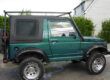
We do, and we have for a long time. We build two different designs for the 1989 to 1997 Geo Tracker and the 1998 Chevy Tracker. Those trucks share the same body. One is the full 2-piece removable top. The other is the Sport top, a lower-profile 2-piece that gives the little truck a whole different look. Both are hand-laid fiberglass, molded off a real Tracker in our Los Angeles shop. Both bolt on with no cutting or drilling.
This guide is that phone call written down. I will explain how the two designs differ, who each one suits, and what they cost today. I will cover the colors and add-ons you can order, and the honest things to know about fitting a new top on a truck that is nearly thirty-five years old. I will cover installation, shipping, and the questions Tracker owners ask us most.
Maybe you have been searching for a roof for your Tracker and finding nothing but worn-out soft tops and the occasional rusty used lid. This is the guide I wish someone had handed you. Let us put a real roof on it.
A Quick History of the Geo Tracker

Trackers are a bit of an oddball, and that is exactly why people love them. It was a joint venture between General Motors and Suzuki, built at the CAMI plant in Ontario, Canada. Chevrolet dealers sold it under the Geo name. Short wheelbase, almost no overhangs, and part-time four-wheel drive, in a choice of 2-door wagon or 2-door convertible. Suzuki engineering under a Chevrolet badge, and it climbed like it.
Geo Tracker Versus Chevy Tracker
Here is the detail that matters for your roof. For 1998 the Geo name went away and the truck became the Chevy Tracker. The body did not change. That is why we cover 1989 through 1998 with the same tops. In 1999 the Tracker was redesigned on a new body. Those 1999 to 2004 trucks take a completely different top. If you have a 1999 or newer Chevy Tracker, you need our other Tracker lineup, not the tops in this guide. The quickest way to tell is the year on your registration. If it says 1998 or earlier, you are in the right place. If it says 1999 or later, you need the other lineup, and we build that one too.
Why the Soft Top Is the Weak Link
Tracker convertibles came with a soft top from the factory, and after a few decades most of them are done. The windows yellow and crack, the seams leak, and a pocketknife gets through one in seconds. The factory hard tops that came on wagons are getting scarce. A fiberglass Geo Tracker hard top solves all of it at once. You get a quiet, dry, lockable cabin and you keep the open-air fun. Both of our designs are removable.
The Two Geo Tracker Hard Top Designs We Build
Prices below are what our site lists at the time of writing, so check the product page when you order.

The 2-Piece Removable Hard Top
This is the full roof. It splits into a front section and a rear section. Pull the front for open-air driving and leave the rear in place with your gear locked up. At 158 pounds and roughly 65 by 27 by 44 inches, it is the bigger of the two. Buyers rate it 4.5 out of 5 across fourteen reviews. You can buy the complete 2-piece top, or just the front section or just the rear section. That is why the listed range runs from $445 for a single section up to $1,395 for the complete top.
Our Sport is also a 2-piece removable design. It is a lighter, lower top at 110 pounds and roughly 42 by 59 by 28 inches. That lower line changes the whole stance of the truck, and it is the one that draws comments at the gas station. Owners give it a perfect 5 out of 5. Like the full top, you can order it complete or by section. The range runs from $445 to $1,545. The Sport is ordered by model year group, either 1989 to 1994 or 1995 to 1998, so have your year handy.
Which Geo Tracker Hard Top Is Right for You
Two designs is a simpler choice than it sounds. Picking a Geo Tracker hard top comes down to how you use the truck and what you want it to look like.
Choose the Full 2-Piece If You Want the Most Roof
If your Tracker is a daily driver, a winter rig, or a work truck, the full 2-piece is the answer. It gives you the most enclosed space, the tallest cabin, and the most tin-top feel. The front section still comes off on a nice day. This is the top I point people toward when they are tired of fighting a soft top and just want the truck sealed up.
Choose the Sport If You Want the Look and the Weight Savings
Our Sport top is for the owner who bought a Tracker because it is fun. It is nearly fifty pounds lighter than the full top, which matters on a truck this small. The low profile gives it a sharper, sportier silhouette. You still get a sealed, lockable cabin and a removable front section. If you care how your truck looks rolling into a trailhead, this is your top.
What If You Are Not Sure
Call us. We will ask what year you have, whether it is a wagon or a convertible, and how you drive it. Then we will tell you straight which top fits your life. That is a five-minute conversation, and it beats guessing with a thousand-dollar purchase.
What Both Geo Tracker Hard Tops Share
Whichever design you choose, the construction is identical, because both come out of the same molds, the same shop, and the same process.

Every top is hand-laid fiberglass built in a master mold. Each one gets a single-stage UV-resistant paint and a mildew-resistant gray carpet liner inside. The side windows and rear hatch are DOT-approved tempered safety glass, tinted 31 percent, which is the maximum the law allows. Our Weather Guard treatment cuts road and wind noise so you can hold a conversation at speed. It also insulates the cabin, so your heater and air conditioner work less. Out back, the hatch lifts on dual gas struts.
Bolt-in is the whole design. No cutting and no drilling of your Tracker is required. Every top ships with all the hardware you need, and every one is made in the USA.
Colors, Primer, and the Add-On Options
This is where you make your Geo Tracker hard top yours, and the lineup gives you more room to customize than people expect.

Four Finish Choices
Black is the standard color. White and tan are available at an additional charge. It runs $50 or $100 depending on whether you are ordering a single section or a complete top. The fourth choice is primer, at no surcharge, and it might be the smartest one. Order the top in primer, then have a body shop match it to your Tracker’s factory paint. On a truck in one of those bright nineties colors, a color-matched top looks like it came from the factory.
Sliding Windows
Side sliding windows are the most popular add-on at $300. They lock from the inside and have a screen to keep the bugs out. They open from back to front. In a cabin as small as a Tracker’s, a little cross-breeze on a summer evening makes a real difference. Dog owners swear by them.
Lighting
A surface-mounted LED brake light adds $65 and comes with splices and hardware. If you are not comfortable with auto wiring, have a professional hook it up. A battery-powered LED dome light adds $45. Three LEDs put out 51 lumens with no bulbs to replace, and one nine-volt battery runs it for days.
Roof Rack
A roof rack adds $375 and turns a Tracker into a surprisingly handy little hauler. A standard rack carries 75 pounds evenly distributed. It is not meant for kayaks, canoes, jon boats, or other large or extremely long loads. If you plan to haul a boat, tell us when you order and we will talk through the right setup.
What It Is Like to Live With a Geo Tracker Hard Top
Specs tell you what a top is. Daily driving tells you whether it was worth it. Here is what changes once a fiberglass top goes on your Tracker.
The Quiet Hits You First
A Tracker soft top drums and flaps at anything over forty, and after a while you stop noticing how loud it is. Then the hard top goes on and the noise just stops. The carpeted, insulated shell soaks up road and wind noise. Conversations drop back to normal volume, and the radio suddenly sounds like it should. People tell us this is the change they feel on the very first drive, usually before they have left the driveway.
Four Seasons Instead of Two
Weather Guard insulation does more than cut noise. Heat stays in during winter and out during summer, so the heater and air conditioner both work less. A Tracker that used to sit in the garage from November to March turns into a truck you drive year round. More than a few drivers have told us the winter ride became their favorite.
Security You Can Actually Rely On
A soft top is a blade away from an open vehicle. With tempered glass and a solid shell, your tools, your camera, and your dog’s bed stay put. That holds at the trailhead and in the parking garage. That peace of mind is worth more than most people expect until they have it.
Open Air When You Want It
Both designs are two-piece, so the Tracker spirit survives. On a good day you pull the front section and enjoy the sky. Drop it back on when the clouds roll in. You get the sealed roof of a hard top and the open-air freedom that made you want a Tracker in the first place.
Keeping Your Tracker Hard Top Looking New
A fiberglass Geo Tracker hard top asks very little of you, which is a big reason people keep them for a decade or more. A few habits stretch that even further.
Wash It, Wax It, Check the Seals
Wash the top with the rest of the truck and put a coat of automotive wax on it a couple of times a year. That protects the UV-resistant paint and keeps the finish fresh. Once a season, run your hand around the door and hatch seals and make sure they are clean and seated. A seal that is kept clean keeps sealing.
Recheck the Fasteners
After your first few weeks of driving, and after any hard trail day, give the brackets and screws a quick check. Snug anything that has loosened. A little settling is normal on a removable top, and thirty seconds with a wrench keeps it tight and rattle-free. That is honestly the whole routine. For a roof you expect to keep for years, it is not much to ask.
New Geo Tracker Hard Top or a Used Factory Lid
I get this question right after the price question, so let me take it head-on. Would you be better off hunting down a factory hard top off a wagon? I understand the appeal. Finding one is the trouble.
What a Used Top Really Costs
Clean factory tops are getting scarce, and the good ones are priced like collector parts. The bargains usually come with rust in the gutters, missing hardware, and cracked seals. The glass has often lived through thirty summers. You inherit all of it with no warranty and no support. A new top from us arrives built for your exact year range. It is sealed, glassed, carpeted, and complete with hardware. You also get a thirty-day return window and a shop that answers the phone.
What a Leaky Roof Does to the Rest of the Truck
A leaky top does not just drip on your seat. It soaks the carpet, rusts the floor pans, and fogs the inside of the glass every cold morning. On a Tracker that is already fighting its age, that is the last thing the body needs. A sealed fiberglass top keeps the cabin dry and protects the truck underneath it. That is a big part of why buyers tell us the top paid for itself at resale.
Straight Talk About Fit on a Thirty-Year-Old Tracker

I want to be honest about something, because you will read it in reviews and I would rather you hear it from me first.
Every Geo Tracker hard top we build is molded to fit a factory 1989 to 1998 body. Those trucks are now twenty-eight to thirty-seven years old. Some have been in fender benders. Some have been flexed on trails for decades, and some have simply settled. A top molded to factory spec can need a little trimming going onto a body that has shifted. Several buyers have told us they trimmed a bit of interior trim or a seal to get it perfect. Most said it fit well out of the crate.
How to Get a Tight Fit
Three things make the difference. Dry-fit the top with your helper before you fasten anything. Check every edge and gap. Follow the installation sequence exactly, because tightening out of order is how gaps happen. And give the seals attention. If a seam ever weeps, a bead of sealant along it solves most cases. Our shop will walk you through it on the phone.
Check the Crate Before You Sign
One more honest note. Freight is rough on big boxes. A Tracker owner once opened a damaged crate and found a few pieces of hardware missing. We sent them right out. The lesson is to open the crate and inspect the top before you sign for it. If anything is damaged, refuse the shipment and call us at (800) 664-8677. That one habit protects you completely.
Installing Your Geo Tracker Hard Top at Home
Plenty of people search for a Tracker hard top installer near me and find nobody within a hundred miles. Few shops have ever seen one. Good news. You do not need an installer. This is a bolt-in top designed for the driveway.
You will need one other person to lift it safely. At 110 to 158 pounds the top is awkward even if it is not heavy. Your crate includes all the hardware and a step-by-step instruction sheet, and the key is to do the steps in order. On a Tracker you start by removing the soft top and the plastic trim around the rear with a Phillips screwdriver. The factory tailgate molding stays in place. Then you dry-fit the sections, start every fastener loose, and check your door clearance. Tighten in sequence. Finish by seating the perimeter gasket and the corner foam and sealant. Budget a relaxed afternoon the first time.
Shipping, Lead Time, and Returns
Every Geo Tracker hard top is built to order, so there is a wait. Lead times vary with our production schedule. Ask for a current estimate when you order and plan around it.
When your top ships it goes by common carrier in a protective crate. We send you the tracking number and the carrier’s name. The carrier then calls you to schedule delivery. Have a second person there to help unload. Inspect the top before you sign. Liftgate and inside delivery cost extra, so ask the carrier if you want them.
Not satisfied? You can return a standard top within 30 days of receipt for a full refund, excluding shipping and handling. Special-order Tracker tops are not returnable, so confirm your choices before we build.
What Tracker Owners Say After Living With Their Top
I could tell you a Geo Tracker hard top from our shop holds up, but you should hear it from the people driving them.
Across fourteen reviews on the full 2-piece top, the same themes keep coming up. A good fit for most, a quieter ride, and solid build quality. Customer service that sorts out problems when they come up. A few owners needed minor trimming to get the fit perfect, and one added sealant to a front seam. They said so plainly, which I respect. One buyer whose crate arrived damaged with hardware missing had the parts sent out right away. The Sport top carries a perfect rating, and the first thing one owner wrote about it was simply that it looks sweet.
Frequently Asked Questions
Both of our designs fit the 1989 to 1997 Geo Tracker and the 1998 Chevy Tracker, which share one body. The full 2-piece top and the Sport top both come as a complete top or as a single front or rear section. If you have a 1999 or newer Chevy Tracker, that is a different body and needs our other Tracker top, so check your year first.
At the time of writing the full 2-piece lists from $445 to $1,395 and the Sport from $445 to $1,545. The low end of each range is a single front or rear section, and the high end is the complete two-piece top. White and tan add $50 to $100 depending on the option, and add-ons like sliding windows and a roof rack are priced separately.
Both are removable two-piece designs with the same fiberglass, glass, carpet, and hardware. The full 2-piece is the taller top with the most enclosed space and weighs 158 pounds. The Sport is a lower, sportier profile at 110 pounds, nearly fifty pounds lighter, and it changes the look of the truck. Choose the full top for maximum roof and the Sport for style and weight savings.
Yes. For 1998 the Geo name changed to Chevy Tracker but the body stayed the same, so the 1998 truck takes the same tops as the 1989 to 1997 Geo. The redesign came in 1999, and those later Trackers need a different top. If your title says 1998, you are in the right place.
Yes. It is a bolt-in design with no cutting or drilling, and every top ships with all the hardware plus a step-by-step instruction sheet. You will need one other person to lift it safely. Remove the soft top and rear trim, dry-fit the sections, start the fasteners loose, check door clearance, then tighten in order. Most people finish in an afternoon.
Black is standard. White and tan are optional at an additional charge. You can also order the top in primer at no surcharge and have a body shop match it to your Tracker’s factory color, which is a popular route for owners keeping a truck in its original nineties paint.
Yes. The side windows and rear hatch are DOT-approved tempered safety glass, tinted 31 percent, which is the maximum allowed by law. They stay clear for the life of the top and will not scratch, fog, or yellow the way plastic windows do. The rear hatch opens on dual gas struts.
Every top is built to order, so lead time depends on our production schedule. Ask for a current estimate when you place your order. Once it ships by freight, delivery usually takes only a few days, and the carrier will call you to schedule a time. Have a second person on hand to help unload.
Give Your Tracker the Roof It Deserves
Two designs, one shop, and a soft spot for the little truck GM and Suzuki built together. Maybe you want the full roof of the 2-piece, or the lighter, sharper look of the Sport. Either way there is a Geo Tracker hard top here built for your truck and nothing else.
Browse the Geo Tracker hard top lineup to compare both designs side by side, or call us at (800) 664-8677 and tell us what year you drive and how you use it. We will help you pick the right top, confirm your fit, and get it built. We are truck nuts too, and the Tracker has been part of this shop for a very long time.